

A Technical Guide to Preventive Maintenance, Measurement Accuracy and Equipment Reliability in Industrial Environments
Electrical testing instruments are essential assets in industrial operations. From verifying voltage levels in power distribution systems to measuring insulation resistance, analysing power quality and troubleshooting electrical faults, these instruments support critical maintenance and safety decisions.
Brands such as are widely used by electrical engineers, maintenance technicians, commissioning teams and calibration laboratories because of their measurement capabilities and reliability.
However, even high-quality instruments require proper handling, periodic inspection, preventive maintenance and calibration. Exposure to harsh operating environments, incorrect measurement practices, physical damage and neglected maintenance can gradually affect their performance.
For industries operating across Saudi Arabia, where electrical testing equipment may be exposed to high ambient temperatures, airborne dust, humidity, industrial contaminants and demanding field conditions, maintaining instrument reliability is particularly important.
This article explores practical engineering measures that help extend the operational life of Fluke electrical testing instruments while maintaining measurement accuracy and electrical safety.
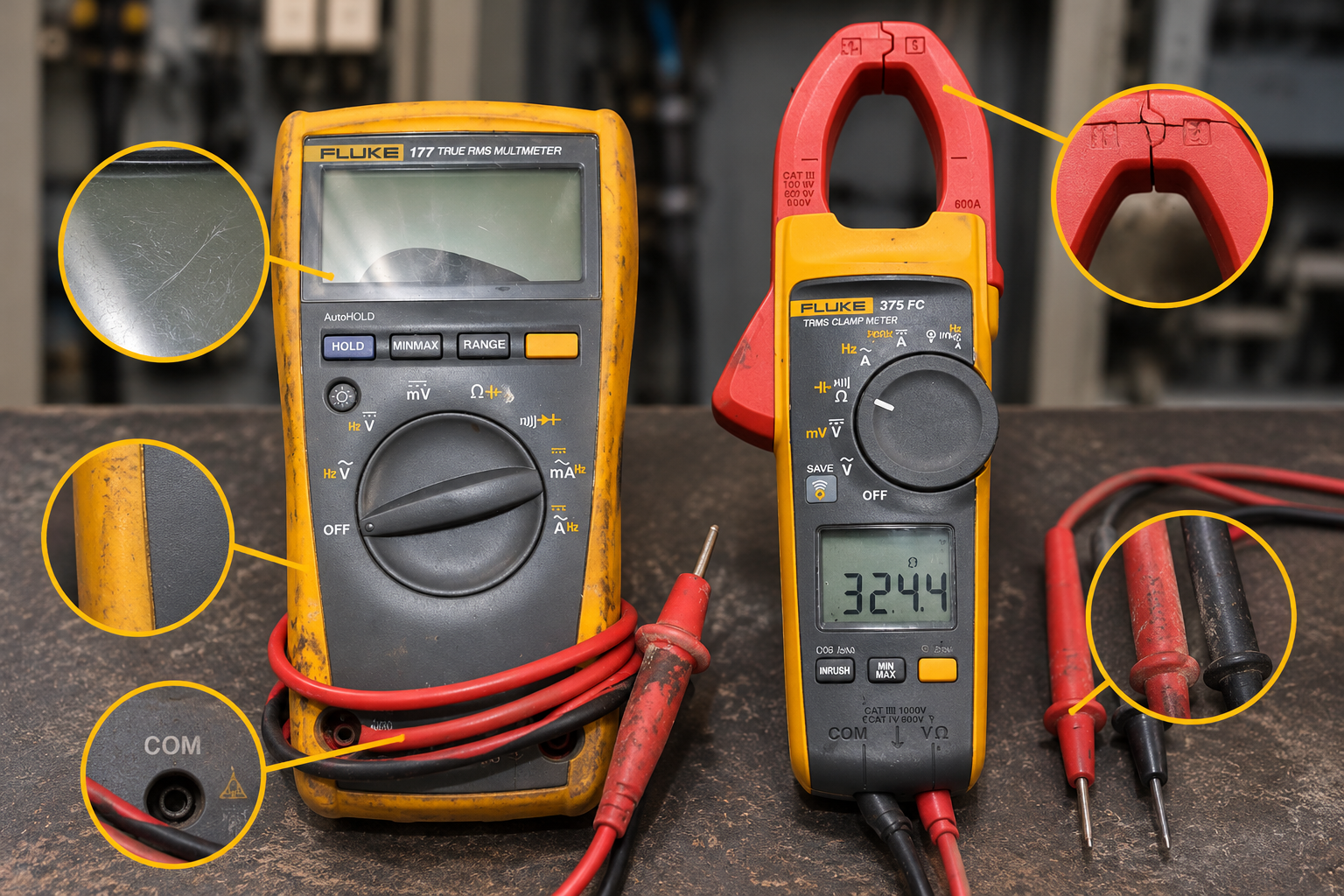
The operating environment has a direct impact on the service life of electrical testing instruments.
In Saudi Arabia, electrical maintenance equipment is frequently used in:
Oil and gas processing facilities.
Petrochemical plants and refineries.
Power generation and distribution stations.
Industrial manufacturing facilities.
Construction and infrastructure projects.
Marine and offshore installations.
Water treatment and utility facilities.
These environments present different challenges.
High ambient temperatures: Prolonged exposure to temperatures beyond an instrument's specified operating range can accelerate battery degradation, affect electronic components and reduce display reliability.
Dust and airborne particles: Dust accumulation around input terminals, switches, connectors and ventilation openings can interfere with electrical connections and mechanical operation.
Humidity and condensation: Moisture entering the instrument housing or input terminals can contribute to corrosion, leakage currents and unstable measurements.

